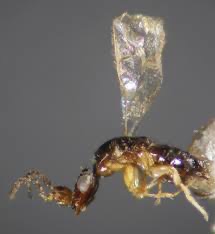
My apologies in advance if this post puts you off figs, but even though nature can be disgusting at times, symbiosis is an important part of many organisms’ life cycles. Such is the story of the fig wasp and her relationship with fig trees. There are only two species of fig trees in the United States – the Florida strangler fig and the giant bearded fig; figs are unique among fruits because their flowers are on the inside of the fruit, which makes pollination an interesting endeavor. For each fig there is a single corresponding female wasp that is so small and insignificant (well she’s significant to the figs) to have a common name – Pegoscapus mexicanus pollinates the strangler and Pegoscapus tonduzi pollinates the bearded fig. When the fig is ready for pollination, it emits a scent that attracts the corresponding wasp, which squeezes through a tiny hole in the fruit, losing her wings and antennae in the process. Once safely inside, she runs around like a mad woman, spreading the pollen from the fig she was born in to the current fig. Not all of the fig’s ovaries can be reached by the wasp, which ensures there are always enough seeds to create future figs. Born pregnant (more on that in a moment), she also lays eggs, and once she has done all she can to propagate both species, she dies.
The eggs mature into grubs that grow inside the seeds – it only takes a few weeks for them to fully develop into wasps. The males emerge first and mate with the still developing females. If that’s not creepy enough, the male dies immediately after copulation. The females emerge and collect pollen before exiting the fig, and the cycle continues.
Sources:
fs.usda.gov/wildlflowers/pollinator/pollinator_of_the_month/fig-wasp.shtml
figweb.org/interaction/how_do_fig_wasps_pollinate/index
 I Am A Voice For The Voiceless