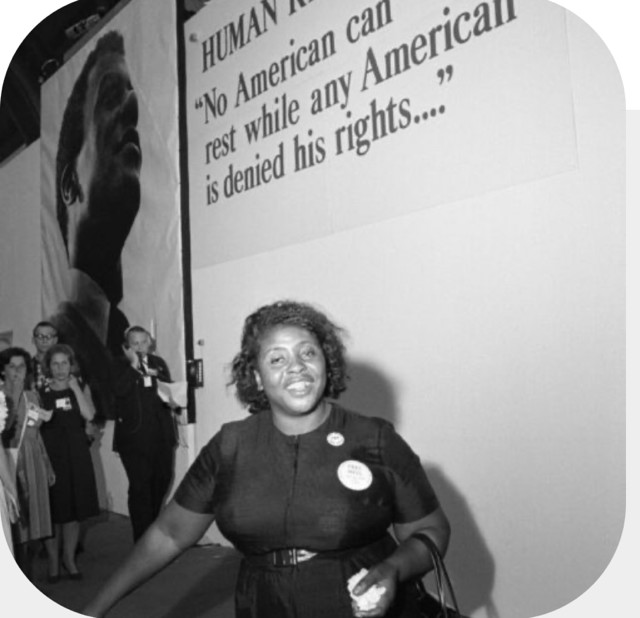
Some of you may have heard of Fannie Hamer’s tireless work for civil rights, which included lobbying for voting rights and against forced sterilization, but her lesser known work involved advocating for what we now call food justice. At the time, black farmers were routinely denied loans by the USDA, and in 1969, she created the Freedom Farm Cooperative to address these inequalities. In addition to providing resources to help farmers, she worked to provide food and jobs to impoverished communities along the Mississippi delta. The co-op started with a $10,000 grant and the purchase of forty acres in Sunflower County. Members paid a dollar a month and grew soybeans, cotton and other cash crops to cover the property taxes and other expenses on part of the land; the rest of the property was used to grow produce that was given to the members. At first, only thirty families could afford the membership, but 1500 were members in name. Eventually, the farm purchased another 640 acres and Fannie expanded the co-op to include community gardens and a commercial kitchen. Then she created what she called the Pig Project, an outreach program similar to Heifer International that provided a source of protein to families who couldn’t afford meat – with the help of the National Council of Negro Women, she purchased 35 sows and 5 boars. From this initial stock, a family in need would receive a piglet to raise and breed as a source of income; then they would donate the offspring to other families in need. Today the Freedom Farm is still going strong, which is extremely important given that African American farmers make up just 2% of all farmers as opposed to 15% a hundred years ago. Fannie Lou Hamer’s legacy lives on, but, as always, there is still more work to do.
Sources:
communityharvestsrq.org/block/black-history-spotlight-fannie-lou-hamer
bread.org/article/fannie-lou-farmer-pioneer-of-food-justice
 I Am A Voice For The Voiceless